
What to Do Immediately After Storm Roof Damage in South Florida
Even though we’re on the tail end of hurricane season here in Florida, the risk of storm-related damage doesn’t really go away. Tropical cyclones can form any month of the year. And while the extensive coastlines of the Sunshine State make for great living, they also mean exposure to this risk.
Fortunately, you can take steps to limit the fallout if a storm does impact your home or business. That starts with being informed. With that in mind, we’ve built this three-step guide. It walks you through what any homeowner or business property owner in South Florida should do immediately after a storm they think may have damaged their roof.
Step 1: Safety and inspection
Your first priority needs to be the safety of yourself and anyone else on your property.
Even if you’re curious about potential storm damage, don’t go outside to check until the storm has fully abated. The National Oceanic and Atmospheric Administration (NOAA) recommends checking local news or an NOAA weather station to make sure you’re truly in the clear. With hurricanes in particular, you need to confirm that you’re not just in the eye with more severe weather headed your way.
Once you know that you and other affected people are safe, you can inspect for damage. Start by looking around the ground. Check for shingles that might have flown off, or other debris that indicates something happened to your roof.
Don’t forget to check inside, too. Discoloration or wetness on your ceiling or walls are clear signs that something happened that needs attention. Keep checking for a few days. In some cases, it takes a while for water damage to become apparent.
Next, look at any trees around your house or business. Downed branches could have harmed your roof. Missing ones are equally problematic. You never know what they could have hit in the process of flying away.
Grab a pair of binoculars to get a good look at what’s going on.
If you can do so safely, you can also get a ladder to check it out. Be extra careful, though. The storm could have loosened a gutter or a part of your eave that would otherwise support the ladder. If you’re not sure if you can safely go up to take a look, wait for a professional to check things out for you.
As you look around, take pictures or videos of anything you note. This can help with your insurance claim.
Step 2: Emergency repairs
If you know there’s been some damage, take steps to minimize the fallout. If water’s dripping inside, put down buckets to catch it and move anything that would be negatively affected (e.g., electronics, books).
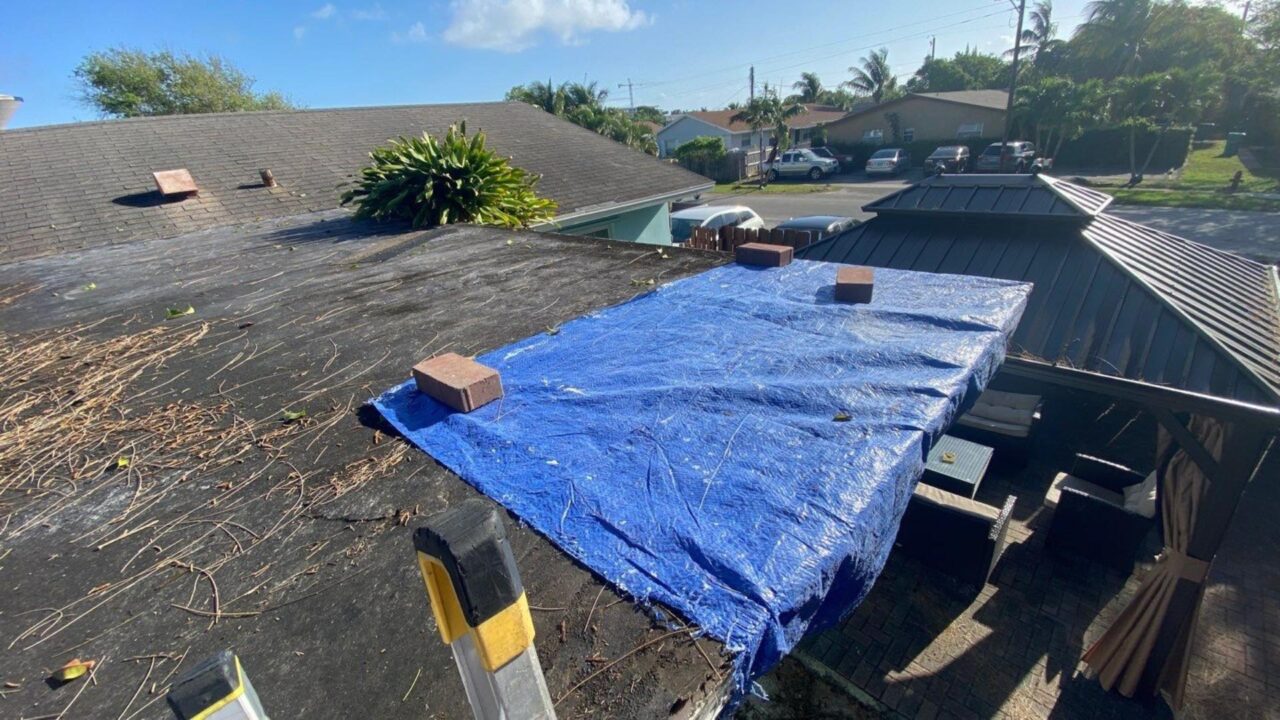
Outside, adding a tarp or sturdy plastic sheeting over any damaged areas helps. If you can’t safely get onto the roof yourself, get a professional. Searching online for emergency roof tarping in your city should point you in the right direction.
Keep receipts for anything you buy or any pro services for which you pay. Your insurance might cover those costs.
Step 3: Insurance and documentation
Get in touch with your insurance company right away. Many have a time limit on when claims need to be submitted. Send any photos or videos you’ve taken of the damage.
Then, be responsive to any requests that you provide additional evidence or fill out more paperwork. The faster you reply, the faster you should get your insurance check.
Usually, the next steps after initially submitting your claim include submitting a repair estimate and/or allowing an insurance adjuster to come out and take a look themselves. If you need to get an estimate, work with a roofing company you plan to use. You don’t want to get a low-ball quote from a less-than-reputable company and be left with a smaller claims check than you actually need.
Good news: some roofing companies (including our team) offer free estimates for roof repairs.
Step 4: Permanent repairs
Whether you decide to wait for the insurance payout or pay out of pocket, do your due diligence in finding the right roofing company to make your repairs. Some “storm chasers” show up in the area after severe weather and offer their services. These companies may not be familiar with local building codes, though, and disappear after a time.
Instead, choose a local partner. Because they have a reputation to protect in the area, they should value quality work and safety. Additionally, the right South Florida roofer will know what’s required to stay in building code compliance and will have experience helping homeowners and business owners navigate insurance claims. And they can potentially even offer you a warranty to give you long-term peace of mind.
Our team specializes in making residential and commercial roof repairs in South Florida. We offer free estimates, quality craftsmanship, and written warranties for our work. If your roof needs professional attention after a storm, don’t hesitate to contact us.