
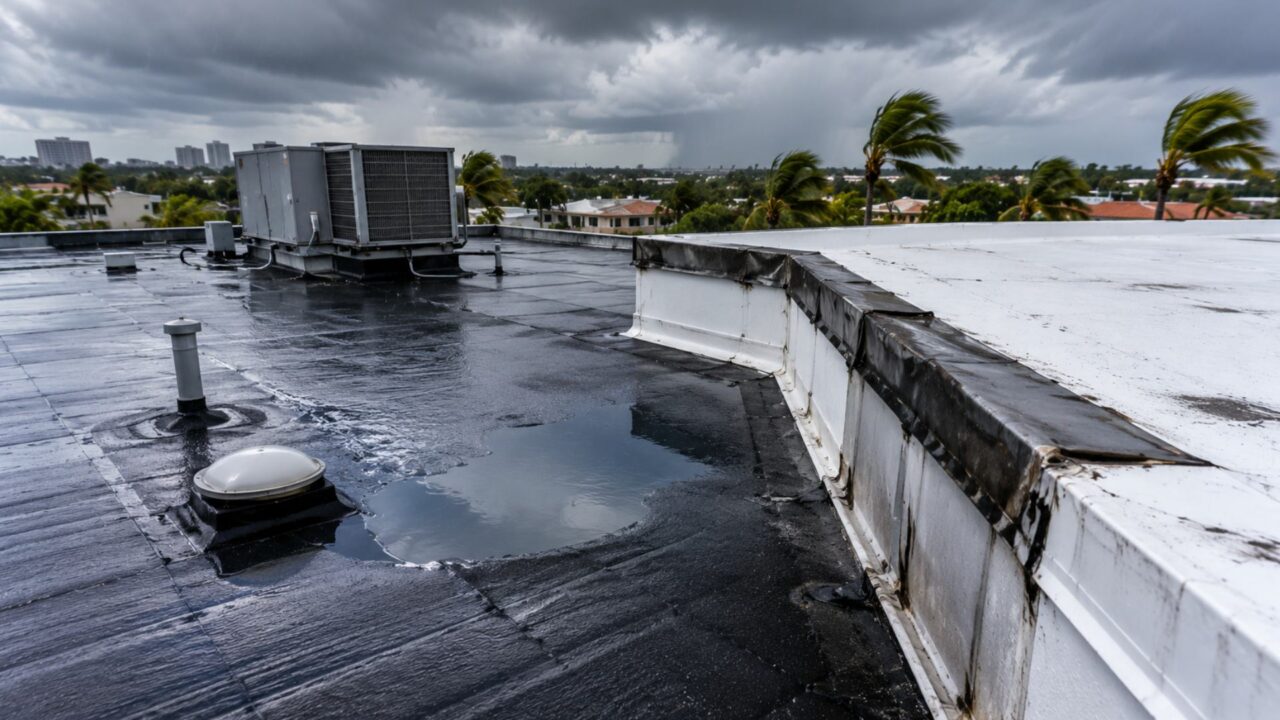
Top 5 Commercial Roof Leak Types for Flat Roof Systems in South Florida
Flat roof systems are common on commercial buildings, condominiums, HOAs, retail centers, warehouses, and multi-family properties throughout Broward County and Palm Beach County. Systems such as TPO, modified bitumen, and BUR are built for performance, but South Florida’s heat, humidity, UV exposure, heavy rain, and hurricane conditions can still lead to roof leaks over time.
For commercial property managers, identifying roof leaks early can prevent interior damage, tenant disruption, mold growth, insulation saturation, and emergency repair costs. At RHI Roofing, we inspect, repair, maintain, and replace flat commercial roofing systems throughout South Florida.
1. Open Seams on TPO Roofing Systems
TPO roofing is a popular single-ply roofing membrane for commercial buildings because it is reflective, energy-efficient, and installed with heat-welded seams. However, seam failures can occur over time due to poor installation, UV exposure, thermal movement, ponding water, and storm conditions.
When TPO seams separate, water can travel beneath the membrane and spread into the insulation before the leak appears inside the building.
Common Signs of TPO Seam Leaks
- Open or lifted membrane seams
- Wrinkles or bubbles near seams
- Soft spots under the membrane
- Water stains after heavy rain
- Leaks near roof edges or penetrations
Common TPO Manufacturers
- GAF TPO Roofing Systems
- Carlisle SynTec TPO Roofing Systems
- Johns Manville TPO Roofing Systems
- Elevate TPO Roofing Systems
2. Flashing Failures Around Roof Penetrations
Flashing failures are one of the most common causes of commercial flat roof leaks. Flashing protects vulnerable areas where the roof connects to walls, drains, pipes, vents, skylights, HVAC curbs, and rooftop equipment.
In South Florida, flashing is exposed to intense UV radiation, vibration from rooftop equipment, heavy rain, and wind uplift. Over time, flashing can crack, separate, corrode, or lose adhesion.
High-Risk Penetration Areas
- HVAC curbs
- Plumbing vents
- Exhaust fans
- Electrical conduits
- Roof drains
- Parapet walls
- Skylights
The National Roofing Contractors Association provides industry resources for roofing maintenance, inspections, and best practices for roof system performance.
3. Ponding Water on Flat Roofs
Ponding water occurs when water remains on the roof surface after rainfall instead of draining properly. On flat commercial roofs, ponding water is a major concern because it adds weight, accelerates membrane deterioration, and increases the risk of leaks.
This is especially common on older BUR roofs, modified bitumen roofs, and flat TPO systems with poor slope or clogged drains.
Common Causes of Ponding Water
- Clogged roof drains
- Blocked scuppers
- Improper roof slope
- Structural settling
- Crushed insulation
- Debris buildup after storms
FEMA notes that standing water and poor drainage can contribute to roof system deterioration and increase the risk of water intrusion. Visit FEMA for building safety and storm preparation resources.
4. Modified Bitumen Cracks, Blisters, and Splits
Modified bitumen roofing is widely used on commercial buildings throughout Broward and Palm Beach Counties because it provides strong waterproofing performance. However, long-term exposure to South Florida heat and UV radiation can cause cracking, blistering, splitting, and surface wear.
When these problems appear, water can enter beneath the cap sheet and move through the roof system.
Signs of Modified Bitumen Roof Leaks
- Blisters or bubbles in the membrane
- Cracks in the cap sheet
- Loose laps or seams
- Granule loss near drains
- Water stains below the roof deck
- Leaks near walls or rooftop equipment
Common Modified Bitumen Manufacturers
- GAF SBS Modified Bitumen Membranes
- SOPREMA SBS Modified Bitumen Roofing
- CertainTeed Flintlastic Modified Bitumen
- Elevate Asphalt Roofing Systems
5. BUR Membrane Deterioration
BUR, or Built-Up Roofing, is a multi-layer asphalt-based roofing system used on many older commercial buildings. BUR systems can perform for many years, but age, UV exposure, ponding water, and storm damage can eventually lead to membrane deterioration.
Common BUR problems include cracking, splitting, blistering, gravel displacement, and saturated insulation.
Signs of BUR Roof Leaks
- Exposed asphalt layers
- Cracked or split membrane areas
- Blistering roof surfaces
- Loose gravel or bare spots
- Soft roof sections
- Persistent leaks after rain
Common BUR Manufacturers
- GAF Built-Up Roofing Resources
- Johns Manville Built-Up Roofing Systems
- Elevate Asphalt and BUR Roofing Systems
- SOPREMA Commercial Roofing Systems
Why South Florida Flat Roofs Leak Faster
Commercial flat roofs in South Florida face more extreme conditions than many other regions. Property managers in Broward County and Palm Beach County must plan for:
- Heavy summer rainfall
- Hurricane-force winds
- High humidity
- Extreme UV exposure
- Salt-air corrosion near coastal areas
- Thermal expansion and contraction
- Frequent rooftop HVAC service traffic
Because of these conditions, routine inspections and preventative maintenance are essential for extending roof life and reducing emergency repair costs.
How Property Managers Can Prevent Flat Roof Leaks
- Schedule roof inspections at least twice per year
- Inspect roofs after major storms or hurricanes
- Clean roof drains, gutters, and scuppers regularly
- Repair seam separation and flashing issues early
- Monitor rooftop HVAC work and service traffic
- Document roof condition with photos and reports
- Create a preventative maintenance plan
Learn more about RHI Roofing’s roof maintenance services, roof repair services, and emergency roof repair services.
Schedule a Commercial Flat Roof Inspection in Broward or Palm Beach County
Small leaks on flat roofing systems can spread quickly beneath the membrane and cause major damage before they are visible inside the building. If you manage a commercial building, condominium, HOA, warehouse, retail center, or apartment property in Broward County or Palm Beach County, RHI Roofing can help identify and repair leaks before they become larger problems.
Contact RHI Roofing today to schedule a commercial flat roof inspection.
Schedule a Roof Inspection with RHI Roofing
Frequently Asked Questions
What is the most common leak on a commercial flat roof?
Flashing failures, open seams, and ponding water are among the most common causes of leaks on commercial flat roof systems.
Do TPO roofs leak at the seams?
Yes. TPO roofs can leak at seams if the welds fail, the membrane moves, ponding water develops, or the system was not installed correctly.
What causes modified bitumen roof leaks?
Modified bitumen leaks are often caused by cracks, blisters, split seams, aging cap sheets, poor drainage, or flashing failures.
What is BUR roofing?
BUR stands for Built-Up Roofing. It is a multi-layer asphalt-based roof system commonly used on older commercial flat roofs.
How often should a commercial flat roof be inspected?
Commercial flat roofs should usually be inspected at least twice per year and after major storms, especially in South Florida.
Does RHI Roofing repair TPO, modified bitumen, and BUR roofs?
Yes. RHI Roofing repairs and maintains TPO, modified bitumen, BUR, and other commercial flat roofing systems throughout Broward County, Palm Beach County, and surrounding South Florida communities.