
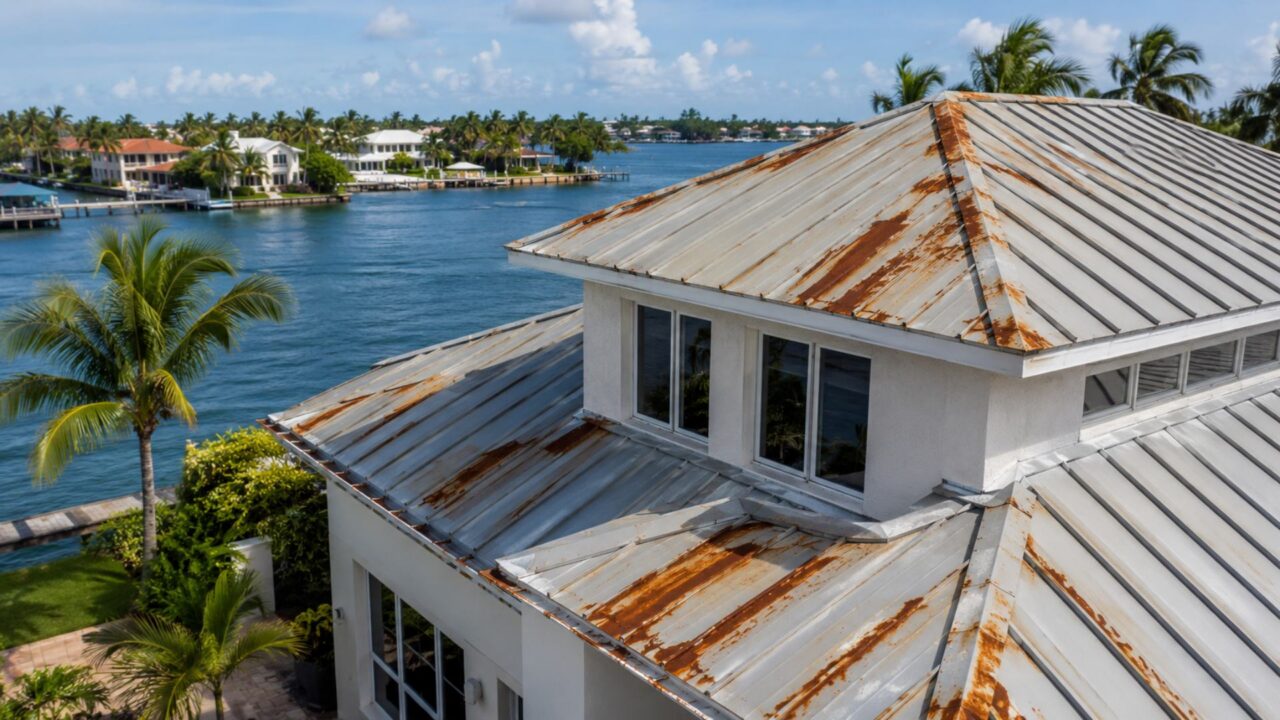
How Salt Air Damages Coastal Roofs
Salt air is one of the most overlooked causes of roof deterioration in coastal South Florida. For commercial property managers in Broward County and Palm Beach County, constant exposure to ocean air, humidity, UV rays, and wind-driven rain can accelerate corrosion on fasteners, flashing, rooftop equipment, and metal roof components.
At RHI Roofing, we help commercial property managers, condominium associations, HOAs, apartment communities, hotels, retail centers, and industrial facilities protect their roofing systems from coastal damage before small issues become expensive repairs.
Why Coastal Properties Are at Higher Risk
Buildings near the ocean, Intracoastal Waterway, marinas, and coastal commercial corridors are exposed to salt particles carried through the air. When salt combines with South Florida’s high humidity and frequent rain, it creates a corrosive environment that can weaken roofing materials over time.
FEMA notes that coastal buildings are exposed to higher moisture, humidity, and salt spray, which can corrode metal connectors and fasteners if the correct materials are not used. Read FEMA’s guidance on corrosion protection in coastal areas.
For property managers in communities such as Fort Lauderdale, Pompano Beach, Deerfield Beach, Boca Raton, Delray Beach, Boynton Beach, and West Palm Beach, salt-air exposure should be part of every roof maintenance plan.
Materials Most Affected by Salt Air
Salt air can affect nearly every roofing system, but some materials and components are more vulnerable than others.
Metal Roofing Systems
Metal roofing can perform well in South Florida when properly designed and installed. However, poor coatings, incompatible metals, exposed fasteners, or low-grade components can corrode faster in coastal environments.
- Rust around fasteners
- Oxidation on metal panels
- Coating breakdown
- Corrosion at seams and penetrations
- Loose edge metal and coping
Flat Commercial Roof Systems
TPO, modified bitumen, and built-up roof systems can also be affected by coastal exposure. While the membrane itself may resist moisture, the metal edge details, flashing, drains, fasteners, and rooftop equipment are often more vulnerable.
Learn more about RHI Roofing’s commercial roofing services.
Tile Roof Systems
Concrete and clay tile roofs are common throughout South Florida, but salt air can still affect the underlayment, flashing, nails, screws, metal valleys, and roof accessories beneath the tile system.
Corrosion on Metal Components
Corrosion is one of the biggest threats to coastal roofing systems. When metal components begin to rust or oxidize, they lose strength and may no longer hold roof materials securely in place.
This can create serious problems during heavy rain, tropical storms, or hurricanes, including wind uplift, loose roof sections, leaks, and interior water damage.
The Florida Building Commission has also addressed corrosion concerns with roofing fasteners, noting that hot-dipped galvanized fasteners performed better than electrogalvanized fasteners in testing. View the Florida Building Commission fastener corrosion information.
High-Risk Roofing Components for Salt-Air Damage
The following components should be closely monitored during roof inspections for coastal commercial properties:
- Fasteners: Rusted or weakened fasteners can loosen roof panels, flashing, coping, and rooftop accessories.
- Flashing: Corroded flashing around walls, vents, drains, and HVAC curbs can allow water into the building.
- HVAC Units: Rooftop equipment is highly exposed to salt air, especially around curbs, stands, mounts, and penetrations.
- Edge Metal: Roof edges experience heavy wind and salt exposure, making them vulnerable to corrosion and uplift.
- Drains and Scuppers: Rusted or clogged drainage components can contribute to ponding water and roof leaks.
Signs of Salt-Air Roof Damage
Property managers should watch for visible signs of coastal deterioration, including:
- Rust stains on roof surfaces or exterior walls
- Corroded screws, nails, or fasteners
- Loose flashing or coping caps
- Bubbling, peeling, or chalking metal coatings
- White oxidation on metal surfaces
- Water stains on upper-floor ceilings
- Musty odors after rain
- Premature roof aging near ocean-facing elevations
If these signs are present, schedule a professional roof inspection before corrosion spreads or storm season exposes the weakness.
Prevention Strategies for Coastal Roof Damage
Schedule Routine Roof Inspections
Commercial roofs near the coast should be inspected at least twice per year and after major storms. Regular inspections help identify corrosion, loose materials, drainage problems, and flashing failures early.
Use Coastal-Rated Roofing Components
Marine-grade fasteners, stainless steel components, corrosion-resistant coatings, compatible metals, and properly specified roofing systems can help extend roof life in coastal environments.
Clean Salt Buildup
Periodic cleaning can help reduce salt accumulation on exposed roofing surfaces, metal details, and rooftop equipment.
Maintain Drainage Systems
Clear drains, gutters, and scuppers help prevent standing water, which can accelerate corrosion and lead to roof leaks.
Repair Corrosion Early
Small areas of rust, loose flashing, or damaged fasteners should be repaired before they compromise larger sections of the roof.
Create a Preventative Maintenance Plan
A preventative maintenance program helps property managers control repair costs, improve roof performance, and document roof condition for insurance and budgeting purposes.
Explore RHI Roofing’s roof maintenance services and roof repair services.
Why Local Coastal Roofing Experience Matters
Roofing systems in Broward and Palm Beach Counties must be designed and maintained for South Florida’s unique environment. A commercial roof near the coast must handle salt air, intense UV exposure, high humidity, hurricane winds, and heavy rainfall.
RHI Roofing understands the challenges commercial property managers face in coastal communities throughout South Florida. Our team provides inspections, repairs, maintenance, storm response, and roof replacement services for commercial properties, condominiums, HOAs, apartment buildings, retail centers, and industrial facilities.
Schedule a Coastal Roof Inspection in Broward or Palm Beach County
Salt-air damage does not happen overnight, but once corrosion starts, it can spread quickly. The best way to protect your property is to inspect your roof regularly and repair small problems before they become major failures.
If you manage a commercial property near the coast in Broward County or Palm Beach County, contact RHI Roofing today to schedule a professional roof inspection.
Schedule a Roof Inspection with RHI Roofing
Frequently Asked Questions
How does salt air damage commercial roofs?
Salt air accelerates corrosion on metal fasteners, flashing, roof edges, HVAC equipment, and other rooftop components. Over time, this can weaken the roof system and lead to leaks.
Are coastal roofs in Broward and Palm Beach Counties more vulnerable?
Yes. Properties near the ocean, Intracoastal Waterway, marinas, and coastal corridors are exposed to more salt, humidity, and wind-driven moisture than inland properties.
What roof components are most affected by salt air?
Fasteners, flashing, edge metal, coping, drains, scuppers, and rooftop HVAC units are among the most vulnerable components.
How often should coastal commercial roofs be inspected?
Coastal commercial roofs should generally be inspected at least twice per year and after major storms or hurricanes.
Can salt-air roof damage be prevented?
Yes. Routine inspections, corrosion-resistant materials, proper maintenance, drainage cleaning, and early repairs can help reduce salt-air damage and extend roof life.
Does RHI Roofing serve coastal commercial properties?
Yes. RHI Roofing serves commercial property managers, HOAs, condominiums, and businesses throughout Broward County, Palm Beach County, and surrounding South Florida communities.